Diabetes and obesity often go hand in hand, creating a challenging cycle of weight gain, insulin resistance, and poor blood sugar control. The good news is that with the right dietary choices, it is possible to manage both conditions effectively. A healthy diet can help reduce weight, improve insulin sensitivity, and lower the risk of complications. Here are some practical diet tips for people living with diabetes and obesity.
1. Control Portion Sizes
Overeating—even healthy foods—can raise blood sugar and contribute to weight gain. Use smaller plates, divide meals into controlled portions, and avoid second helpings. Mindful eating and listening to hunger cues can make a big difference.
2. Choose Complex Carbohydrates
Not all carbs are bad. Opt for high-fiber carbs such as whole grains (oats, brown rice, quinoa, whole wheat), legumes, vegetables, and fruits with skin. These foods release glucose slowly, preventing sudden spikes in blood sugar. Avoid refined carbs like white bread, sweets, and sugary drinks.
3. Prioritize Lean Proteins
Protein helps control hunger and supports muscle mass while losing weight. Include lean sources like skinless chicken, fish, eggs, low-fat dairy, tofu, and lentils. Plant-based proteins are especially helpful as they also provide fiber.
4. Cut Down on Unhealthy Fats
People with diabetes and obesity are at higher risk of heart disease. Reduce saturated and trans fats found in fried foods, bakery items, and processed snacks. Instead, choose healthy fats like nuts, seeds, olive oil, and avocados—but keep portions small since fats are calorie-dense.
5. Increase Fiber Intake
Fiber slows glucose absorption and keeps you full for longer. Aim for at least 25–30 grams per day from vegetables, fruits, legumes, and whole grains. Fiber also supports gut health, which plays a role in weight management.
6. Stay Hydrated with Water
Sugary drinks, energy beverages, and even fruit juices can raise blood sugar and add unnecessary calories. Water is the best choice. Unsweetened green tea, lemon water, and buttermilk are also good low-calorie alternatives.
7. Limit Late-Night Eating
Late-night snacking can lead to poor digestion, weight gain, and uncontrolled sugar levels. Try to finish your last meal at least 2–3 hours before bedtime.
8. Plan Balanced Meals
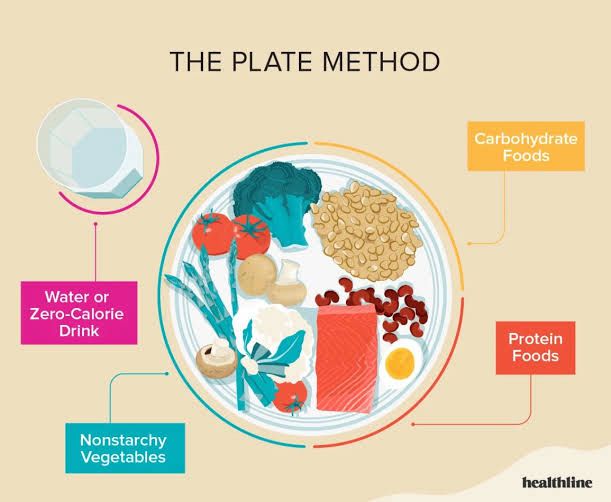
Use the “Plate Method”:
• Half the plate: vegetables and salads
• One-quarter: whole grains or healthy carbs
• One-quarter: lean protein
This simple approach ensures balanced nutrition without overloading calories.
9. Watch Hidden Sugars
Many packaged foods—such as sauces, cereals, and flavored yogurts—contain hidden sugars. Always check labels for added sugars and artificial sweeteners.
10. Be Consistent
Crash diets may give temporary results but are hard to sustain. Focus on long-term, consistent healthy eating. Even small, gradual changes in diet can lead to meaningful weight loss and better blood sugar control.
Write Reviews
Leave a Comment
No Comments & Reviews