
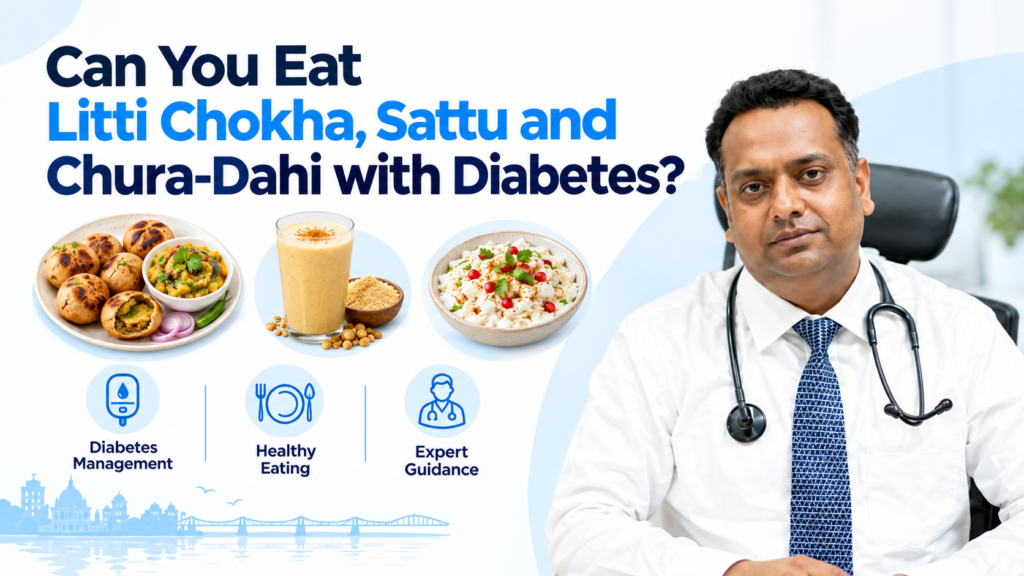
A plate of hot litti chokha. Sattu mixed with lemon and roasted jeera. Chura-dahi before the day gets busy. If these foods are part of your routine, a diabetes diagnosis can leave you wondering what you can still eat. And if you’re searching for the best diabetes doctor in Patna, you probably want advice that makes sense at your own dining table.
Yes, these familiar foods can often fit into a diabetes meal plan. How much you eat, how you prepare them and what you eat alongside them all matter. You may need to adjust portions rather than give up your favourite foods altogether, as NIDDK’s guidance on eating with diabetes explains.
Let’s look at what that means in a Bihari kitchen.
Litti Chokha: Look Beyond the Number of Littis
It is tempting to ask, “How many littis can I eat?”
There isn’t one answer for everyone. A small homemade litti and a large, heavily filled litti are different portions. The amount of atta, sattu, ghee and potato on the plate changes the meal too.
While whole-wheat atta and chana sattu do add nutritional value, they still tend to be high in carbs, which means that having a sattu filling doesn’t really make litti a healthy option to eat heartily without keeping portion sizes in mind.
Here are some ways that you can go about doing that:
- Make smaller littis. Keeping their size consistent makes portions easier to track.
- Roast or bake them and use ghee sparingly. A light brushing is easier to measure than dipping each litti.
- Give baingan and tomato more space in the chokha. Keep potato to a smaller share because it adds another starchy food.
- Consider the whole plate. Adding rice or roti alongside litti increases the total carbohydrate portion.
These suggestions apply the same principles used in Diabetes UK’s advice for balancing an Indian thali: measure cooking fats, include more vegetables and adjust portions when combining starchy foods.
Try this at your next family meal: serve the chokha and salad first, then add your planned litti portion. It makes vegetables part of the meal from the beginning.
Sattu: Pay Attention to What Goes into the Glass
Plain roasted chana sattu can contribute protein and fibre. It also contains carbohydrates, so both the ingredients and the amount of powder matter.
A thin drink made with a measured amount of sattu is different from a large glass containing several heaped spoonfuls. Adding more water changes the thickness; it does not remove the carbohydrates already in the glass.
For a savoury version, use lemon, roasted jeera, mint or coriander, with modest salt. Avoid routinely sweetening it with sugar, jaggery or honey. Jaggery is still added sugar, and honey also counts as a free sugar, as explained in Diabetes UK’s sugar guidance.
Check packaged sattu too. Some products contain grain blends or added ingredients rather than only roasted chana.
One useful question is: “Am I having this as part of my meal, or adding it after a full breakfast?”
That extra glass still counts towards what you eat. A diabetes specialist in Patna can help you decide how it fits your usual breakfast, medicines and daily routine.
Chura-Dahi: Keep the Familiar Breakfast, Rethink the Bowl
Chura, also called chuda or flattened rice, is a carbohydrate food. Plain dahi provides protein as well as some natural carbohydrate. Combining them does not cancel out the carbohydrate in the chura.
The bowl can become much larger than intended when you add sugar, jaggery and a generous amount of fruit.
A practical approach:
- Measure the dry chura before soaking, using the same bowl or spoon each time.
- Choose plain, unsweetened dahi.
- Leave out the routine spoonful of added sugar or jaggery.
- If you add fruit, include its portion in the meal plan.
- For a savoury variation, try cucumber, coriander and roasted jeera.
You do not need to avoid fruit automatically. The aim is to account for everything in the bowl. CDC guidance on carbohydrate counting explains that starches and sugars—including naturally occurring sugars—contribute to blood glucose changes.
Soaking makes chura softer. It does not make a large portion carbohydrate-free.
What Else Is on Your Plate?
A food rarely tells the whole story.
Litti with plenty of vegetable chokha is a different meal from litti followed by rice and a sweet drink. Sattu without added sugar is a different choice from sweetened sattu served alongside a large breakfast.
For many people, the diabetes plate method offers a useful starting point:
- Half the plate: non-starchy vegetables.
- One quarter: a protein food.
- One quarter: carbohydrate foods.
Mixed dishes require some adjustment. Sattu and pulses are good examples of dishes that provide both protein and carbohydrates. Consumption of carbohydrates along with protein or fibre does slow down the rise in blood sugar after a meal, but it does not eliminate the need for moderate portions. See the CDC’s diabetes meal-planning advice for more information.
Bring Your Everyday Meals to Your Next Consultation
When looking for the best diabetes doctor in Patna, ask for help with the foods you actually eat.
Before your appointment, keep a short record of meals, approximate portions and any glucose readings taken according to your existing monitoring plan. Even a photograph of your usual breakfast can make the conversation more useful.
At Dr Prakash Diabetes Specialities Centre, Dr A. S. Prakash is listed as a consultant diabetologist. The centre is in Police Colony, near B-Sector, Paharpur More, Anisabad, Patna.
To discuss your diabetes care, call +91 95070-19786 or use the appointment option on the clinic website. You can also view more on Google.
Begin with an easy step: measure the portion of a familiar food that you habitually serve by eye. Take this information to a diabetes specialist in Patna, who can advise you on how to build this food into a balanced meal.
General Health & Wellness FAQs
How many littis can a person with diabetes eat?
There is no magic number that applies to everyone. The size of the littis, its ingredients, what it is served with, one’s medications, and individual blood glucose response all play a role. Consult your doctor or dietitian to help you determine a safe portion using the size you customarily prepare at home.
Can I drink sattu every day if I have diabetes?
It could certainly be part of your daily meal plan, if you drink it in appropriate portions and it does not contain added sugar. Remember to count it as food, whether you eat it or drink it. Sattu should not be considered as a diabetes cure or treatment and should not replace other medications prescribed by your diabetes care provider
Is chura-dahi better than roti for diabetes?
It depends. The portion size, the way it is prepared, and what it is served with are important variables. Chura-dahi that does not have added sugar could be a good choice, but you still need to be careful about the portion size.
If you are taking insulin or medications that can cause hypoglycemia, consult with your care provider before making significant reductions in the carbohydrates you eat.